Alison Sawatzky
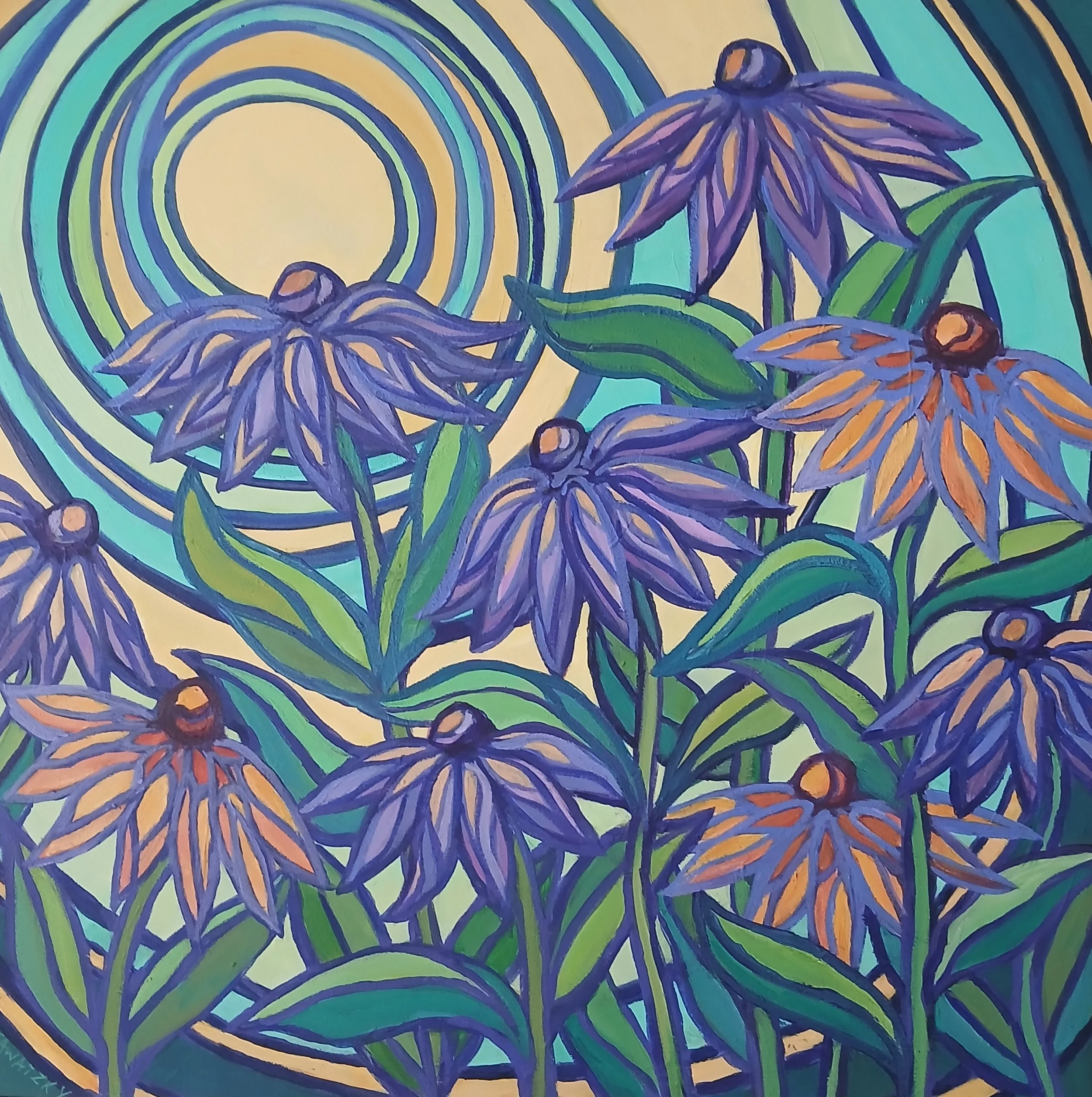
I work in a variety of media, including acrylics, mixed media/collage, and watercolour monotype printmaking. I create both representational and abstract images.
Regardless of the artistic process I use, I firmly believe that an artist should be willing to take risks, try new techniques, and push boundaries. My motto, in the words of Edgar Degas, is: “Art is not what you see, but what you make others see.”
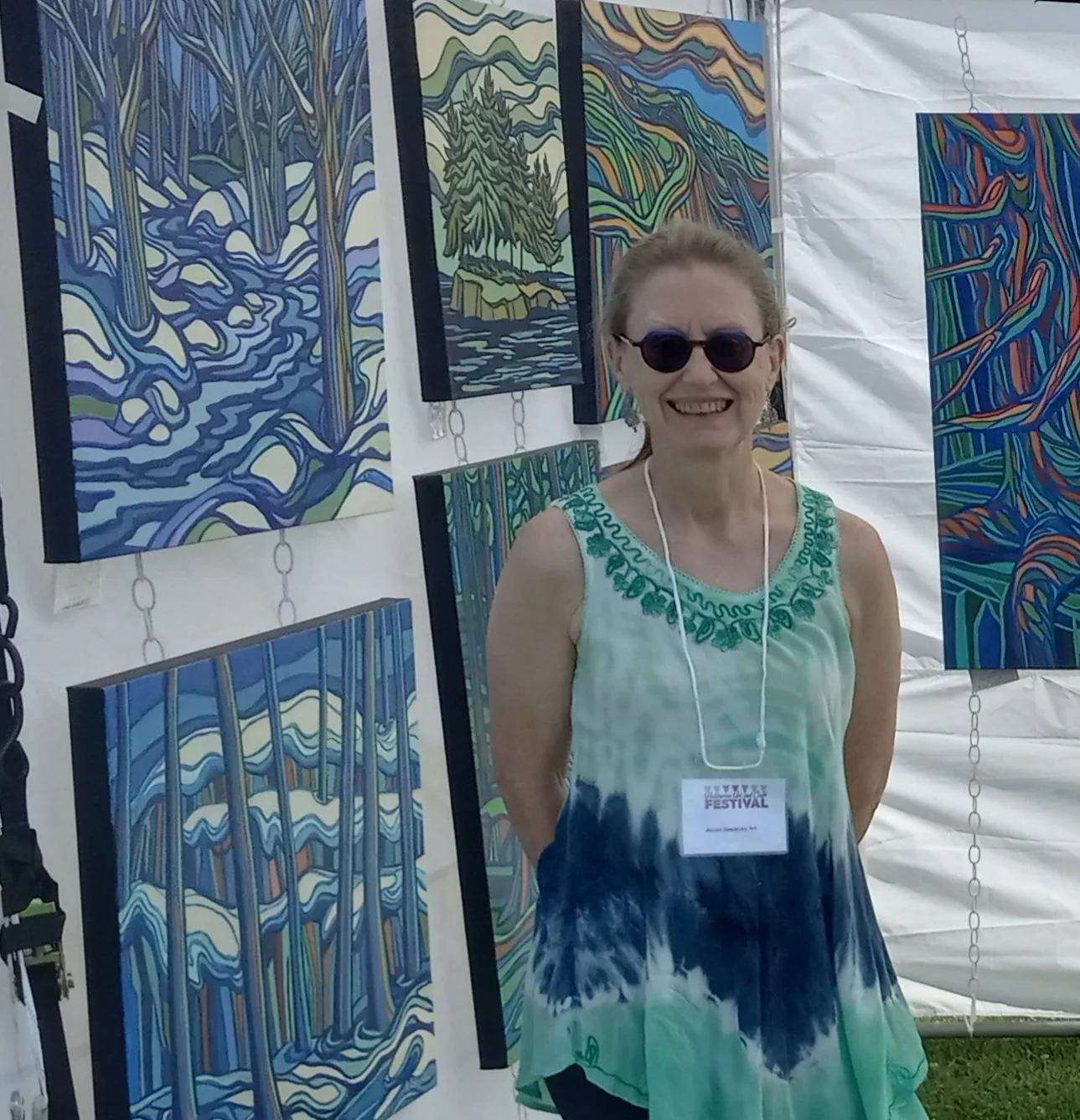
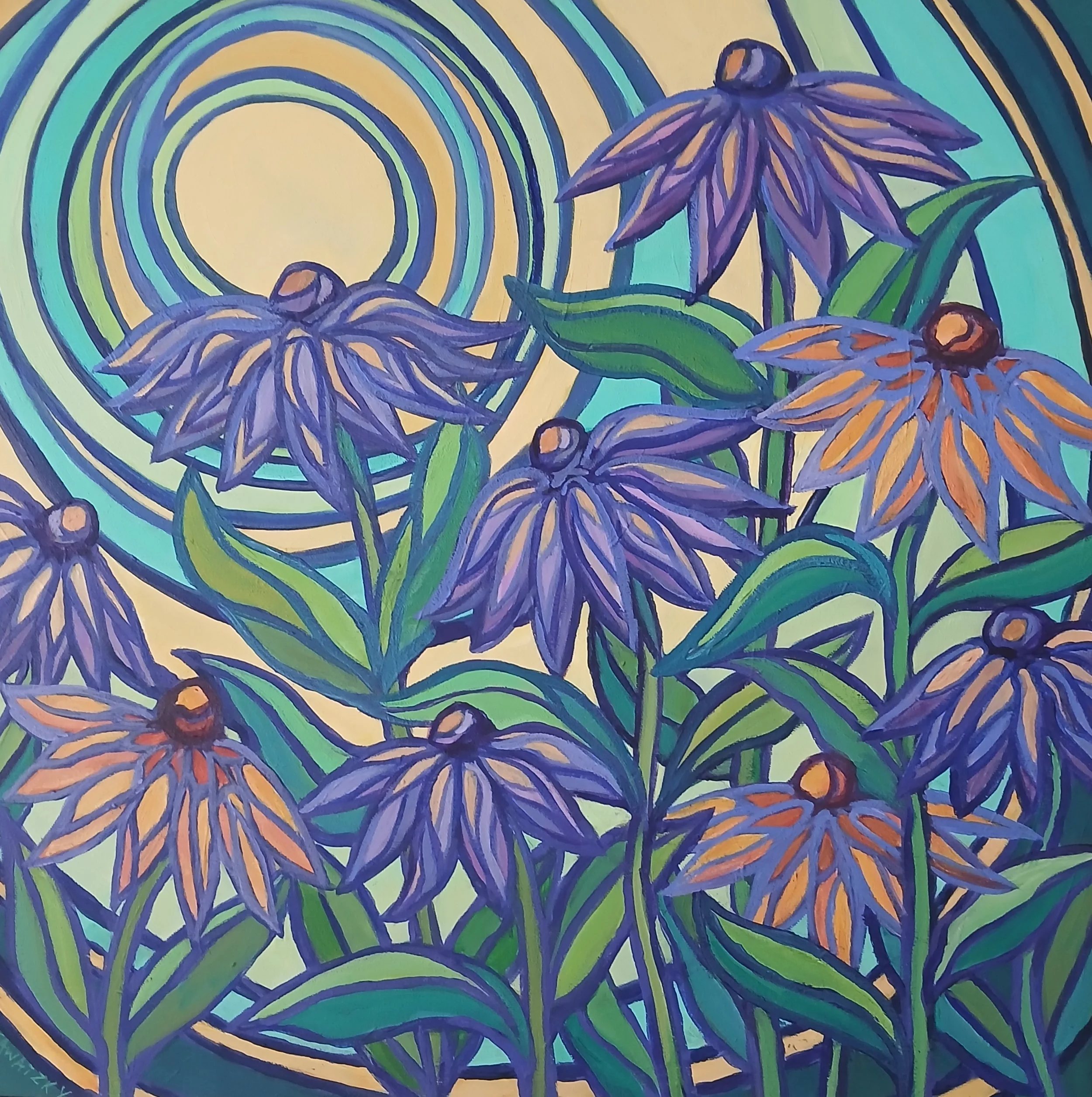
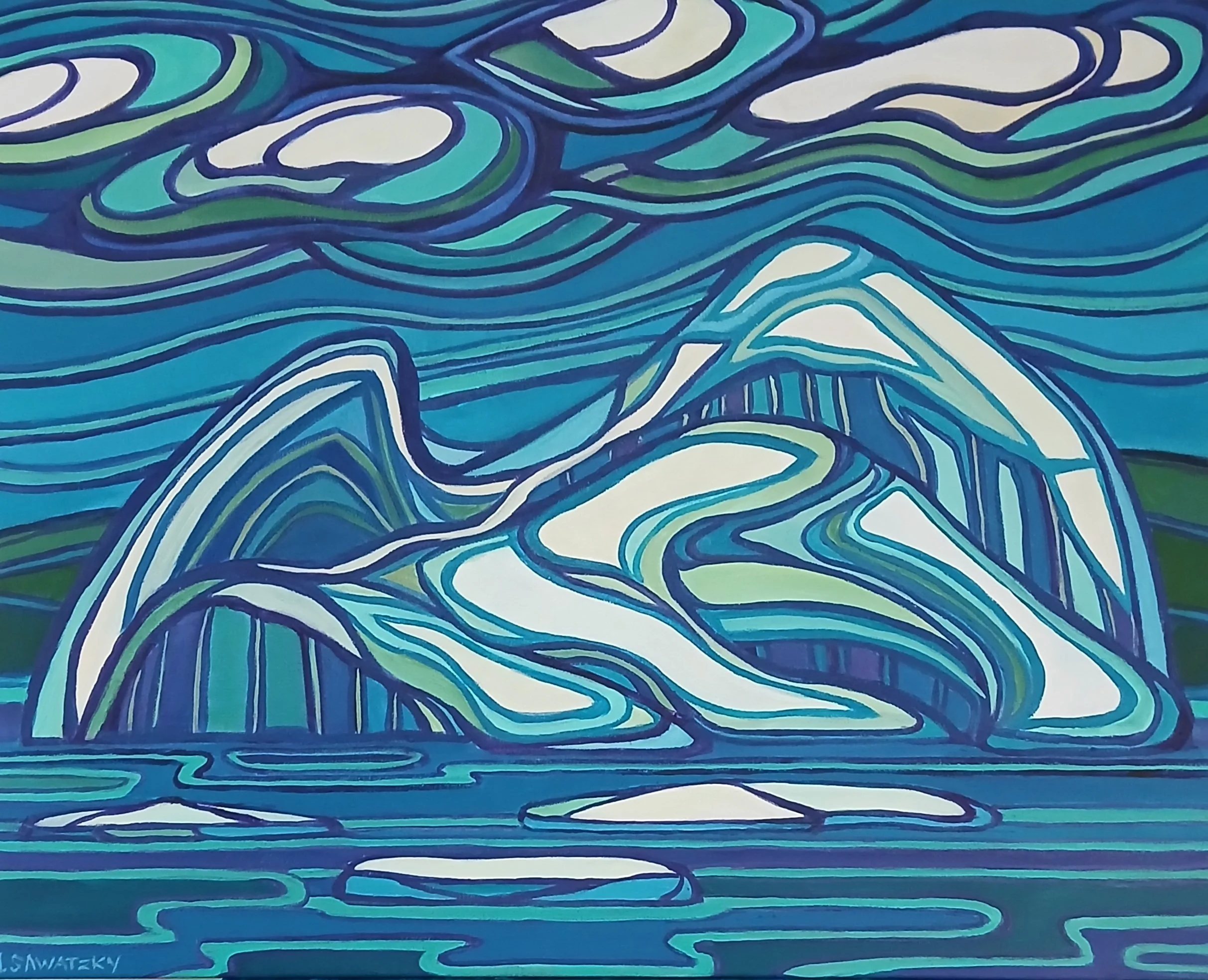
My stylized acrylic landscape paintings are inspired by my love of the Canadian landscape and rural life. Featuring bold, non-traditional colours and strong, graphic use of shape and line, my goal is to encourage the viewers to take a fresh look at the world. I want them to look beyond the way we habitually view a landscape and experience its spirit.
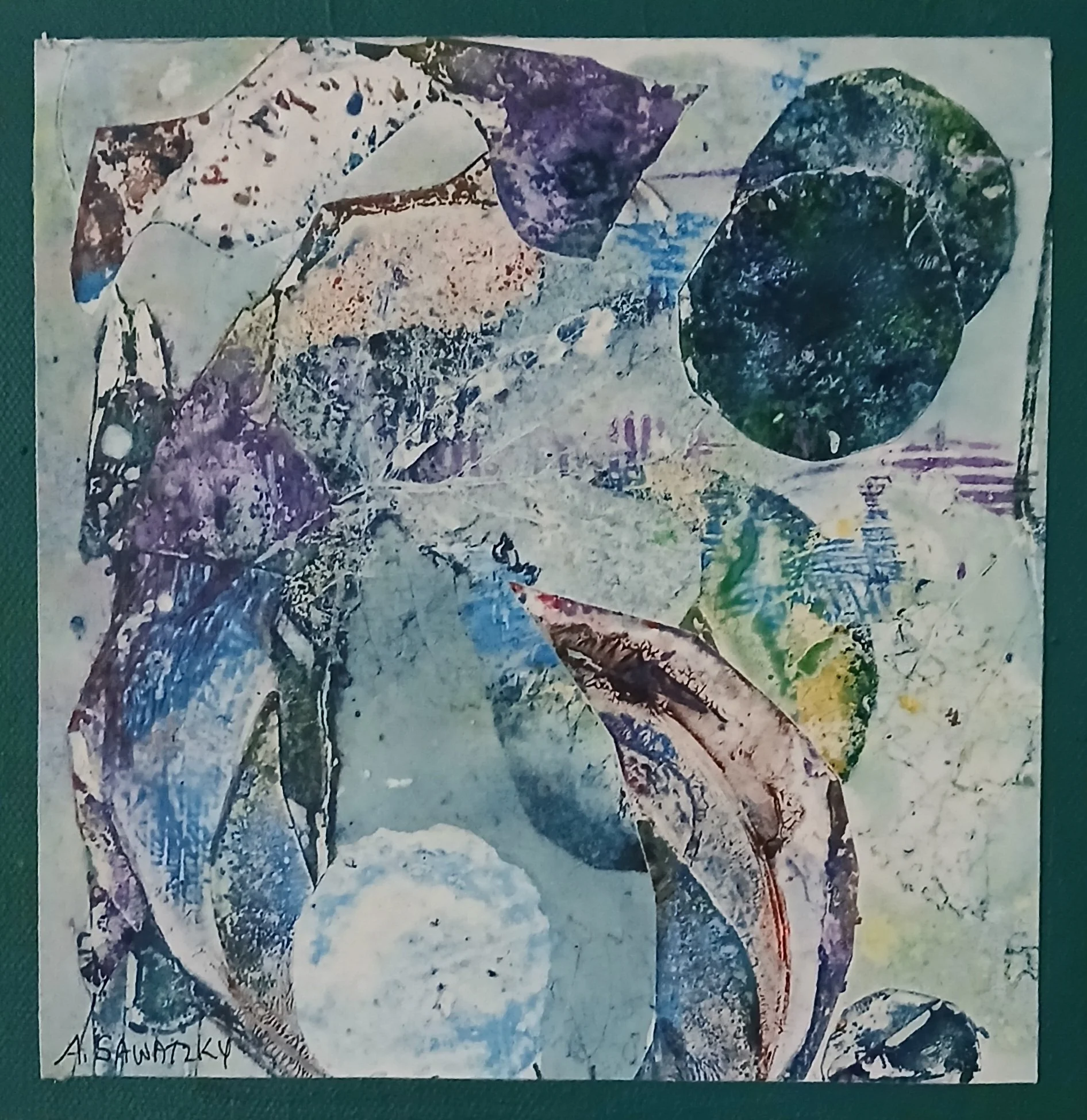
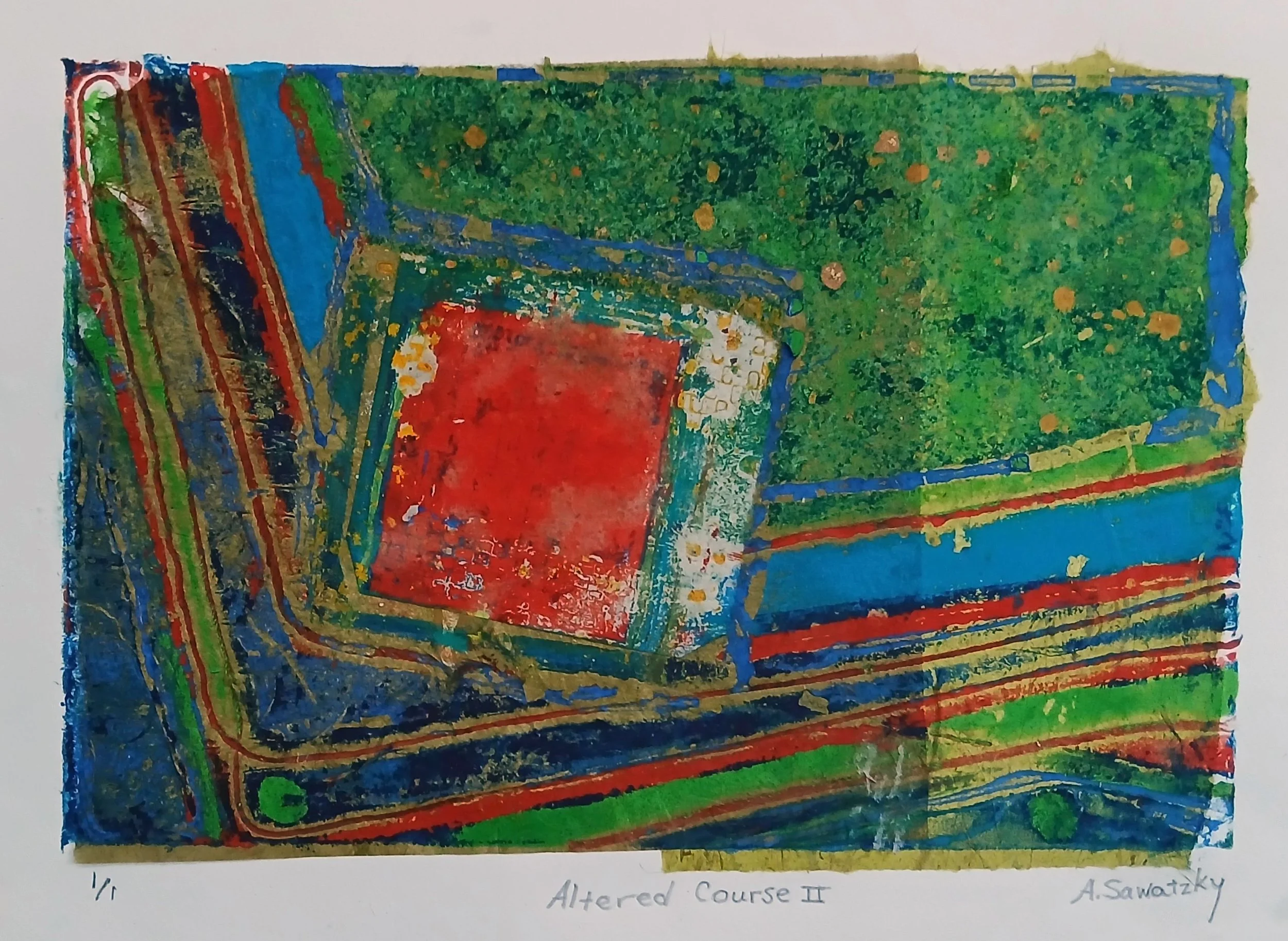
Watercolour monotype printmaking allows me to take a relaxed and experimental approach to creating. Unlike etchings, no successive images are the same when using this process. The original image can change drastically as new layers of colour and texture are revealed, eventually morphing into something totally unexpected. I love the creative freedom of this type of printmaking and revel in the joy of discovery in each new image.
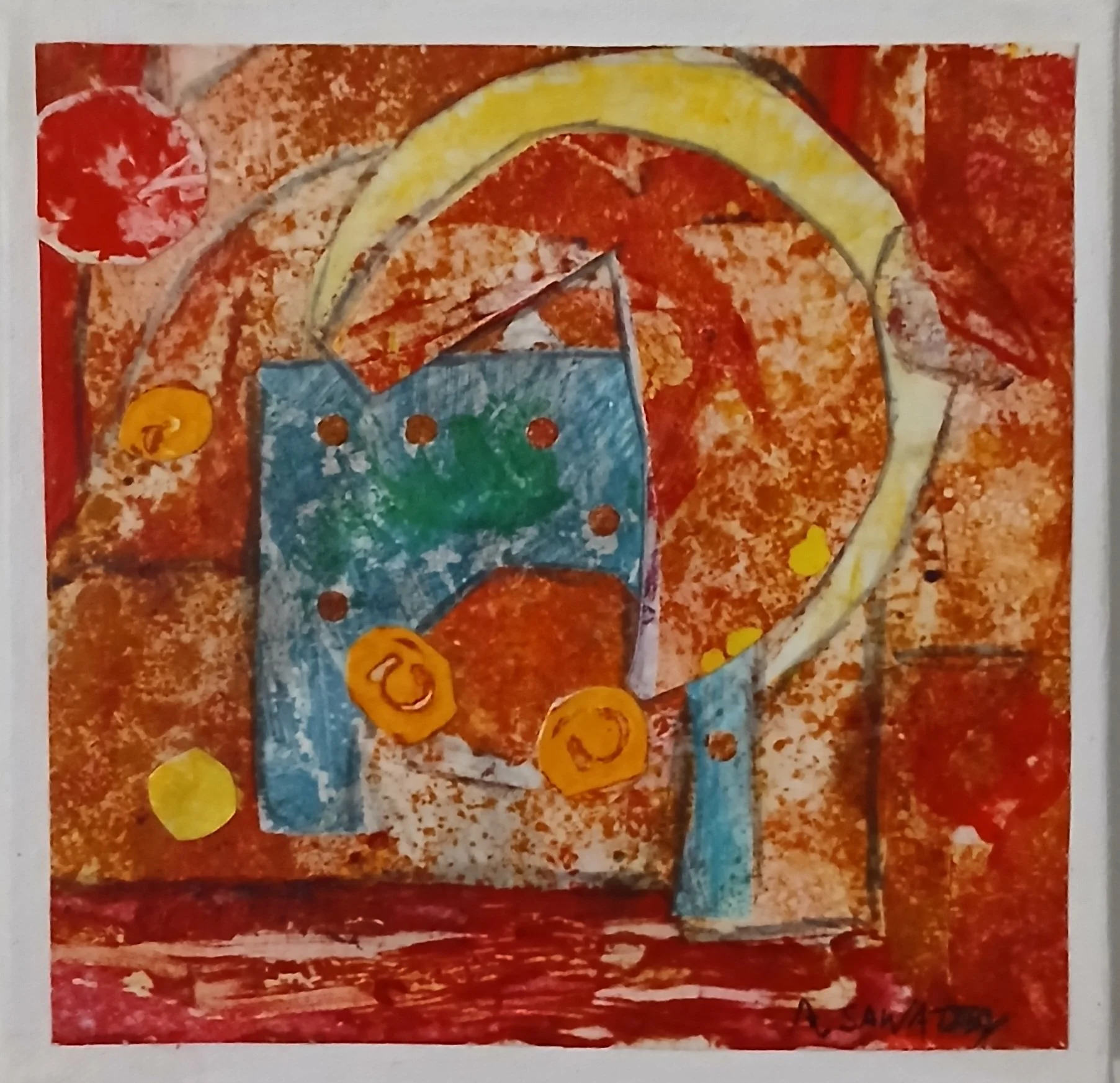
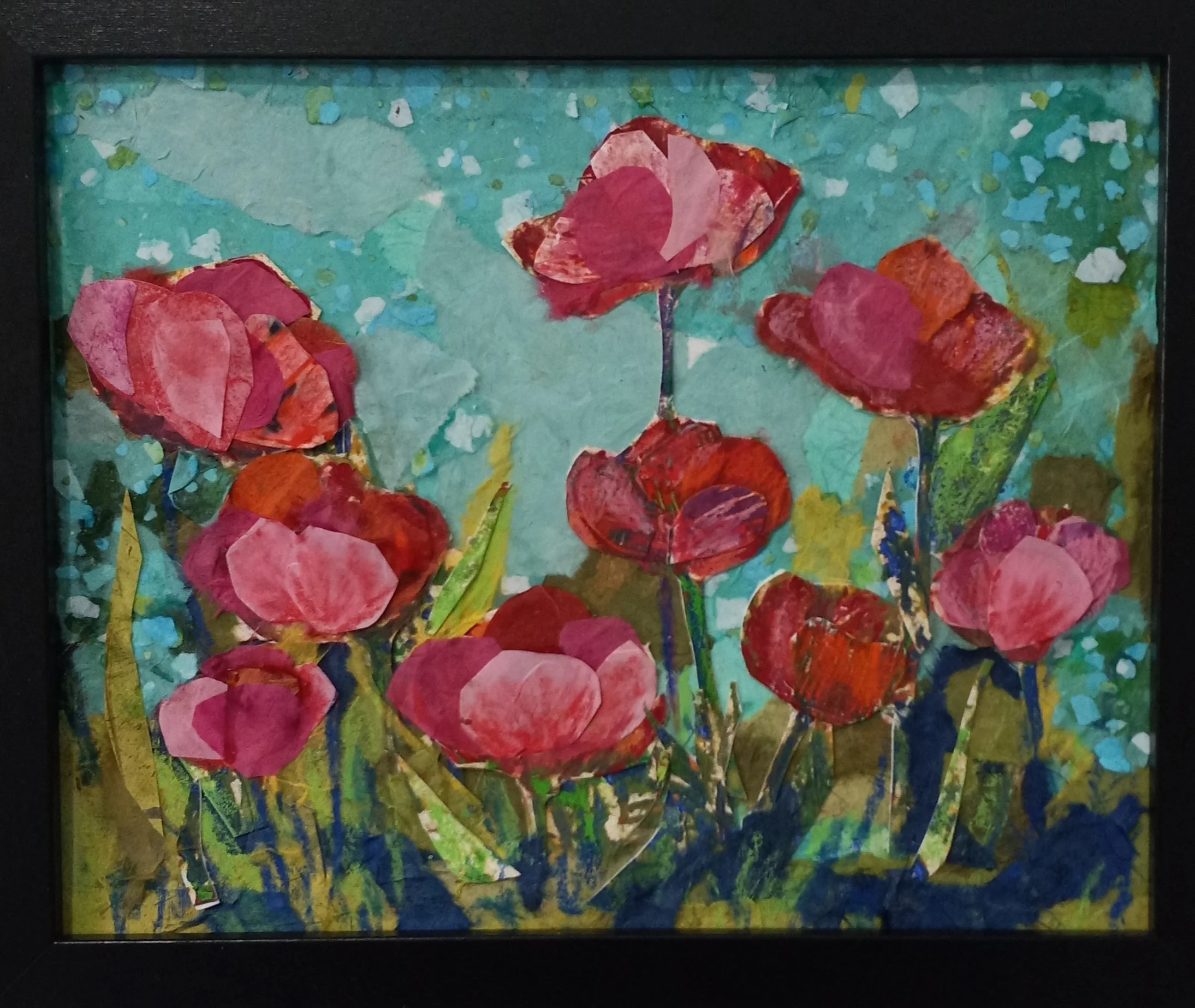
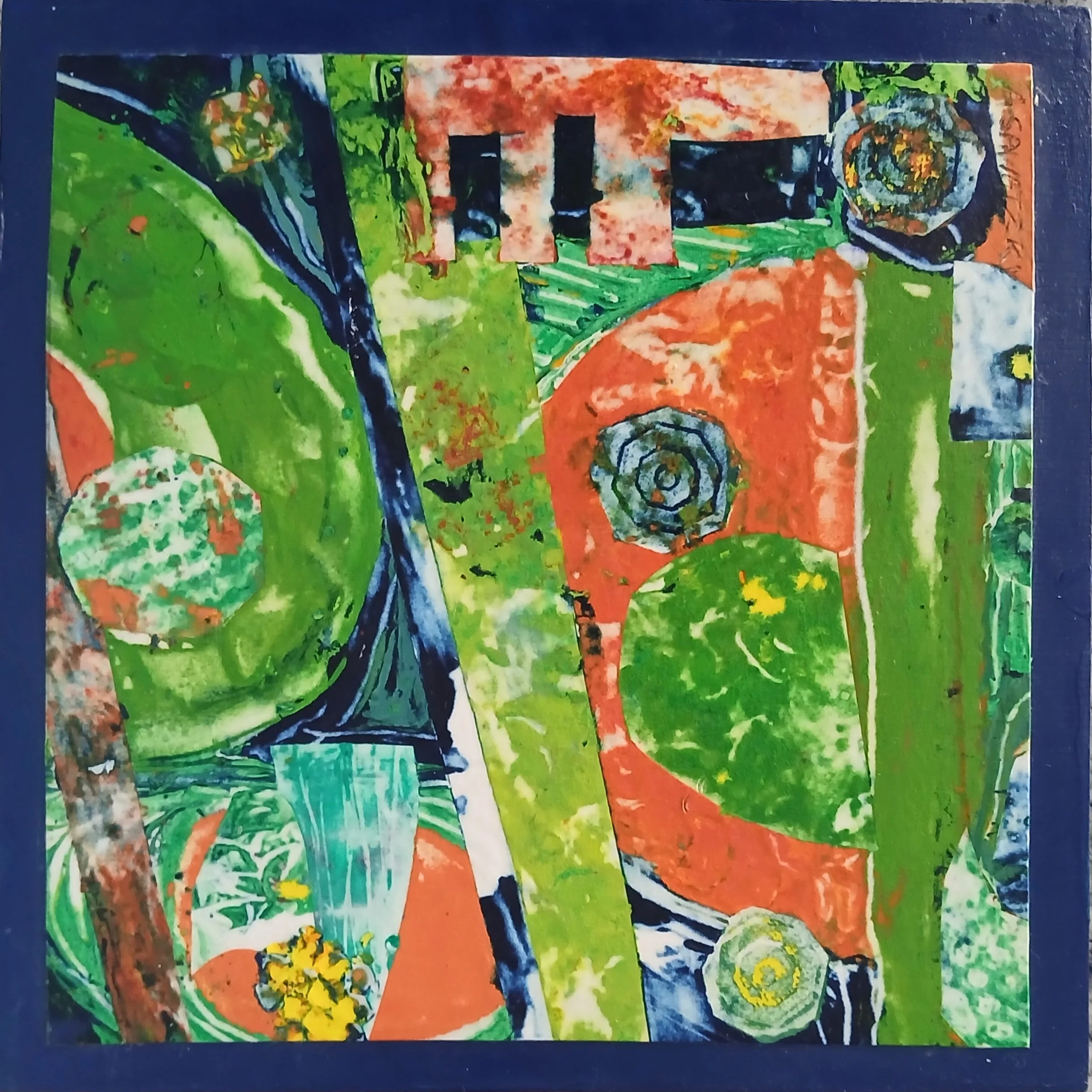
I started creating mixed media/collage works as a direct result of printmaking. Not every print is a success. Some prints require enhancing with ink/pencil/watercolour crayon, etc. Others provide a starting point for collages. Most of my mixed media works are abstracts, although I do venture into botanical works. I find it refreshing and creatively invigorating to step away from the “real world” and work intuitively.
I usually exhibit my work in two or three art shows/studio tours each year. Most recently, I participated in the Haliburton Art Festival (2024 and 2025) and shows in Manotick, Carleton Place, and Kanata. Prior to moving from Dundas to the Ottawa region, I participated regularly in the Dundas Studio Tour.
My watercolour monotypes and mixed media pieces are carried by Artspace106 in Niagara-on-the-Lake, Ontario. Paintings are exhibited through the Kanata Civic Art Gallery in Kanata, Ontario.
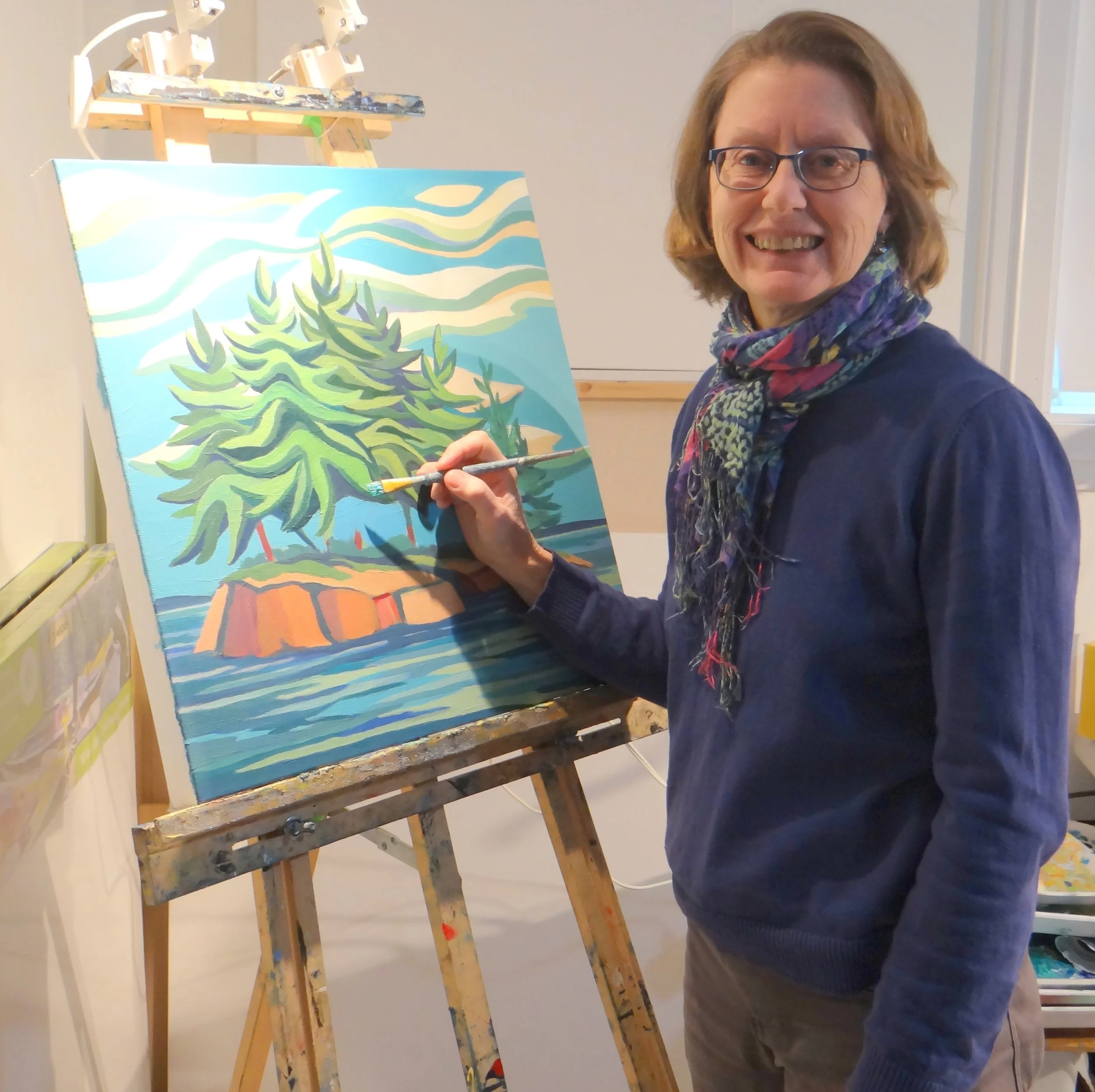
Much of my inspiration comes from hikes, kayaking expeditions, or simply enjoying life on my rural property. The landscapes of the Canadian Shield and Canada’s Coastal Regions are especially appealing to me.
“I am drawn to the contrast of light and dark, the contours of rocks, the dynamic lines of trees, and the movement of wind, clouds and water.”
Each painting starts as a field sketch or studio drawing using photo references and a healthy dose of imagination. Then, I develop a scale drawing in which I refine the composition, simplify shapes, and emphasize contours. Next, I draw the image onto the canvas and begin the process of roughing in colours, using both colour theory and my intuition. As I develop the work, I feel as if I am having a conversation with my subject. There is a sense of give and take as adjustments are made and the painting takes on its own life. The last stage is finicky. Each shape needs to be well defined, and the lines clear-cut. This is done freehand. Often, I end up putting the painting on the floor to better control the movement of my paintbrush. My knees don’t like this stage.
The painting process is slow, but the journey to completion is always exciting. I discover something new with each painting.
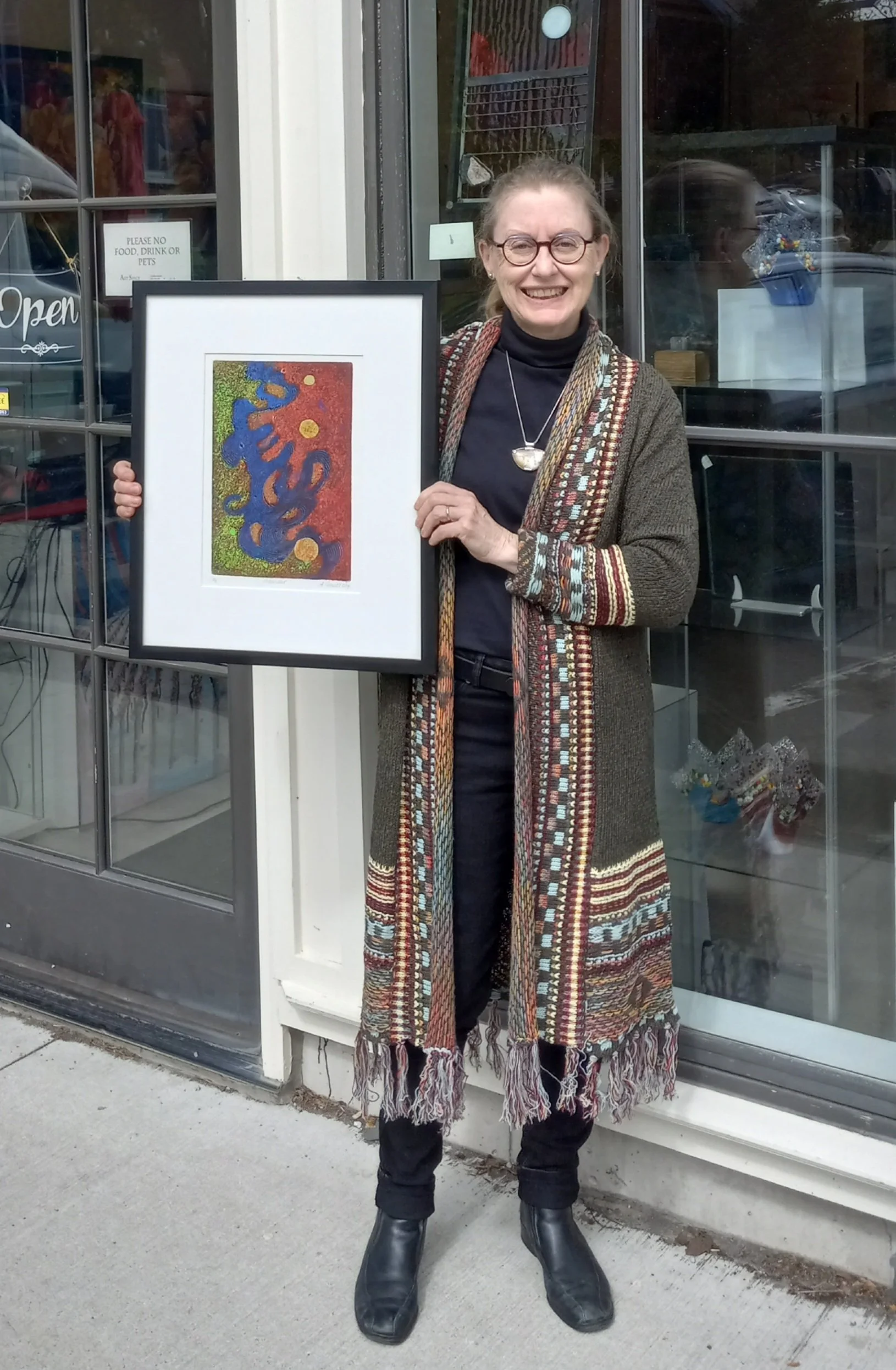
My watercolour monotype printmaking is both highly technical and wonderfully creative. It allows an artist to experiment with and push the boundaries of watercolour paint and its application to a surface. From impasto applications to delicate washes, the options are virtually limitless.
I start by applying layers of watercolour paint to a sanded Plexiglas printing plate. Each layer must be completely dry before I add the next layer of paint. Depending on the image, I apply up to eight or more layers of watercolour to the plate before I pull a print. To help create my image, I often use objects such as feathers, string, or plants on the plate in addition to paint.
I use an intaglio press to print the plate. I carefully place damp printing paper on the plate, the dry plate and then run both through the press. The paper and plate pass through the rollers of the press. The moisture in the paper reactivates the paint, and the top layers of the paint adhere to the paper. Previous paint layers remain on the plate, ready to be printed onto a new piece of paper. Before printing, I sometimes place decorative papers on the plate prior to adding the printing paper, to create a print with collage features, also known as Chine Collé.
Once the plate and paper have gone through the press, I carefully peel the paper off the plate to reveal the image. Each image will be different from the preceding one, depending on how much paint is transferred to each new piece of paper. The differences can be subtle or striking. Once the print is dry, I sometimes enhance it with ink/pencil or additional paint.
Because multiple prints are produced from the same plate, but each image is unique, prints using this method are considered monotypes, and as such, each is an original and numbered 1/1.
Creating mixed media/collage pieces is highly intuitive, and in my studio, a messy process. Different paper scraps end up scattered across tables, and sometimes the floor. Works are often built upon one of my monotype prints. Other times, they start off like a jigsaw puzzle where the reference photo is missing. Regardless of my starting point, the goal is to create an abstract that has a strong composition, interesting colours, and intriguing textures, either real or implied. Archival glue is used to adhere papers to the substrate. Works are sealed with cold wax, varnish, or a gel medium.



Contact
sawatzky@outlook.com
Location
#6 Dennis Montford Studio
Home Studio of Mixed Media Artist Dennis Montford.